
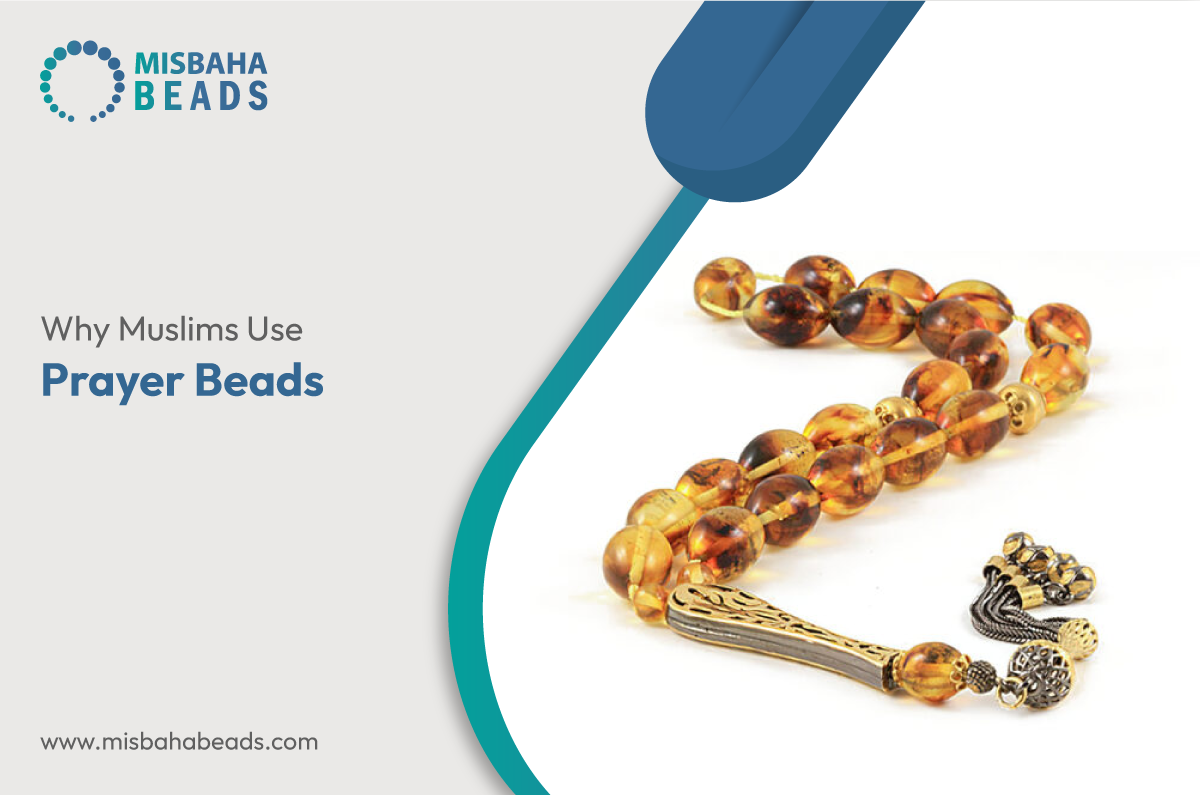
Amid the many beautiful traditions of Islam, remembrance of God, also known as “dhikr,” is the core of spiritual life. Muslims constantly remember Allah through phrases of gratitude, glory, and praise. One such tool that creates a divine connection with Allah is the Misbaha beads, also called “Tasibh.” These beads play a significant role in the spiritual practices of Muslims across the globe. Whether glass beads, wooden beads, or other materials, you can buy prayer beads online to perform longer repetitions of Dhikr. But before you step into the world of Misbaha, let’s first understand where Islamic prayer beads originated.
Every spiritual tool holds a history, and so do misbaha beads. In the time of Prophet Muhammad, Muslims typically used their right hand, date seeds, or pebbles to count and perform dhikr. Recognizing this, Fatimatuz-Zahra, daughter of Prophet Muhammad (peace be upon him), crafted the very first Muslim prayer beads. She used a knotted woollen string to keep track of her dhikr. This became the early version of a prayer tool that was accessible and practical.
Some used a bowl of seeds or beans to keep a count of their recitations or prayers. While some used simple tools, the formalized, beaded misbaha gained popularity later. Regardless of the tool, the purpose remains the same: to count as your performance of the act of worship and create a connection between the worshiper and the divine. Today, the misbaha beads are used across the Muslim world and are often made with materials like ivory, amber, wood, or precious stones.
Fact check: The word “bead” is derived from the Old English word “bede,” which means “prayer.” This organization highlights the deep-rooted connection between beads and acts of devotion for centuries.
Misbaha prayer beads, also known as tasbih beads, are used to perform dhikr, the remembrance of Allah. They serve as a tactile and structured aid to recite phrases of devotion, gratitude, and praise.
The tasbih beads serve as a praying tool that helps to maintain rhythm, focus, and consistency in daily remembrance. Dhikr refers to the remembrance of Allah, which can be performed through repeated recitation of various names of Allah or phrases like
A tasbih typically consists of:
The Islamic prayer beads serve as a practical tool for spiritual practices, as they provide a portable, tangible, and rhythmic way to stay focused and consistent in remembrance. Using misbaha beads offers many advantages, like:
Focus: The physical act of moving beads keeps attention centered and promotes mindfulness during prayer.
Accuracy: Prayer beads maintain an accurate count during recitation without interruption.
Ease: Repeating phrases many times, such as saying “astaghfirullah” (I seek forgiveness from Allah) hundreds or thousands of times, can be more manageable with tasbih beads.
The Misbaha beads originated as an Islamic counting tool for dhikr (remembrance of God) and are evolving from earlier Indian, Christian, and Buddhist bead traditions. In Islamic history, the misbaha became a tangible tool to perform remembrance of God and was widely adopted over centuries, and it then spread across cultures. The cultural spread of Muslim beads then led to diverse styles and materials that are differently referred to in some Islamic countries, like the following:
Indonesian (Tasbih): Commonly crafted from coral, sandalwood, or unique local woods.
Turkish (Tesbihs): Renowned for intricate craftsmanship and fine, thin materials.
Arab (Sibha): Frequently made of natural gemstones.
These different styles of misbaha beads highlight the cultural diversity of Muslim cultures while serving the same purpose.
Performing dhikr has become more structured with beads as a physical tool to count. This allows users to focus on the meaning of the words and concentrate on their worship rate rather than keep track of their counting.
The rhythmic movement of beads keeps the mind focused and reduces mental distractions.
The physical act of using prayer beads enhances the calming effect, and performing dhikr brings peace to the heart.
A misbaha ensures the ease of practice and consistency, particularly after obligatory prayers.
Lightweight and portable, they enable spiritual reflection anytime, anywhere.
The misbaha tools may be viewed as the Islamic misbaha as a religious artefact or cultural accessory, but their core purpose remains functional. Today, the misbaha beads continue to play an important role in the spiritual lives of Muslims. Additionally, many misconceptions have been developed about misbaha beads among people unfamiliar with Islamic practices. In modern times, Misbaha beads are often gifted as tokens of respect and love and are also sold in a variety of designs, catering to different preferences and budgets.
If you are also looking for high-quality sibaha beads, you can buy gemstone beads and immerse yourself in the eretena practice of spiritual reflection and remembrance.
Free shipping all order
Support 24 hours a day
30 days for free return
We ensure secure payment